Heavy-Duty Driveline Rebuilds and Balancing: A Purchaser's Guide to Custom Fabrication and Truck Parts Quality
Business Name: Anderson Brothers Truck & Equipment
Address: 2640 State Hwy 99 N #1, Eugene, OR 97402
Phone: (541) 688-8686
Anderson Brothers Truck & Equipment
Anderson Brothers Truck & Equipment is a long-established truck parts and repair company located in Eugene, Oregon. Founded in 1949, the business has served the region for more than 70 years, building a reputation as a reliable source for heavy-duty truck parts, custom fabrication, and equipment repair. The company works with commercial vehicle owners, fleets, and equipment operators who need dependable parts and services to keep their trucks operating safely and efficiently.
A core focus of Anderson Brothers is providing specialized services for heavy-duty trucks and equipment. Their shop offers custom driveline fabrication and repair, helping customers build, rebuild, or balance drivelines for a wide range of applications. They also specialize in custom U-bolt bending and fabrication, producing precisely sized components for trucks and other heavy equipment. In addition, the company sells both new and used truck parts, stocking a large inventory and offering local delivery in the Eugene and Springfield areas.
Beyond parts sales, Anderson Brothers provides repair and maintenance services for truck components such as transmissions, differentials, and related systems. Their experienced team focuses on delivering practical, cost-effective solutions that help keep trucks and equipment running reliably. With decades of experience and a commitment to local service, Anderson Brothers Truck & Equipment continues to support the trucking and transportation industries throughout Eugene and surrounding communities.
2640 State Hwy 99 N #1, Eugene, OR 97402
Business Hours
Downtime has a cost, and driveline vibration has a method of making that price climb. It begins as a hum under the flooring or a mirror that blurs at 45 miles per hour, then turns into u-joint heat, provider bearing failure, and a service contact the shoulder. The stakes are not abstract. Excess vibration enhances wear across the entire chassis. Tires scallop, transmission installs split, differential pinion seals weep, and fuel economy drops half a mile per gallon. If you depend upon a truck to make, a clean-running driveline is a bottom-line item.
You do not require to end up being a machinist to buy driveline work wisely. You do require to understand how quality shows up, what tolerances matter, and how to arrange a real rebuilder from somebody who is simply painting rusty shafts and pushing in captive u-joints. This guide walks through the procedure and the decisions, from measurement and phasing to balancing and custom parts. It covers where custom fabrication makes sense, what good shops provide, and how to avoid costly do-overs.
What a driveline does, and how heavy-duty changes the rules
At its simplest, a driveline transmits rotating power from the transmission or transfer case to the axle pinion. In heavy trucks and trade equipment the assembly often covers long distances and numerous joints. You might see a two-piece shaft with a provider bearing on a highway tractor, or 3 pieces with an intermediate jackshaft under a mixer or dispose truck. As length grows, so does the need for accurate alignment and balance. A couple of thousandths of an inch of runout that would be safe in a brief automobile shaft can become a shaker when multiplied over 80 inches of tube and 2 or three joints.
Common elements you will encounter:
- Tubes, often 3.5 to 6 inches in size, with wall density from around 0.083 to 0.250 inch depending upon torque and span.
- Weld yokes and slip yokes that mate to universal joints and splines.
- Universal joints, greasable or sealed, often with high-angle or full-round caps for severe service.
- Center or carrier bearings for multi-piece drivelines.
- Flange yokes or companion flanges at the transmission and differential.
- Safety loops or guards in certain applications.
Heavy-duty brings heavier torque pulsation from diesel engines, steeper angles from lifted suspensions or heavy loads, and longer unsupported lengths. Those aspects raise sensitivity to phasing, runout, and balance.
Classic signs, and what they mean
Vibration has signatures. Knowledgeable techs can frequently think the source by frequency and car speed.
A consistent buzz that appears at a specific road speed, independent of engine rpm, indicate driveline imbalance or runout. It will frequently peak around a crucial shaft speed, then lessen or move if you upshift and change driveshaft rpm at a provided roadway speed.
A cyclic growl or rumble that modifications on throttle tip-in might be a u-joint brinelling in one airplane. truck parts Heat at a single cap, dry rust powder under a u-joint strap, or micro-spalling inside the caps verifies it.
A shudder on launch, then smooth cruising, tends to be an angle problem or a worn slip spline binding as the suspension moves.
A drumming at 20 to 30 mph that vanishes above 40 often links a carrier bearing support or a floppy center support bracket.
Not all shakes originate from drivelines. Tires with damaged belts, bent wheels, out-of-round brake drums, bad engine installs, or a damaged pinion yoke can complicate the picture. Before authorizing a rebuild, it is fair to ask the store to inspect yoke pilots, flange face runout, and u-joint bores. A mindful store isolates the problem instead of hanging parts.
The rebuild, step by step, and what quality looks like
A correct rebuild starts with inspection. The store checks tube straightness, yoke bore wear, spline lash, and the match in between buddy flanges. The majority of utilize a V-block and dial indication, or they install the shaft in a lathe. Anything over about 0.010 inch total suggested runout on a normal highway-length tube is suspect. On long areas, target worths are tighter.
Tube replacement prevails. If television is dented, kinked, heavily rusted, or cracked at the weld toe, it requires new steel. Great rebuilders stock DOM and electrical resistance bonded tube in typical diameters and wall densities, then cut to length, prep on a lathe, and fit new weld yokes. Ask whether they use a mandrel to ensure concentricity through the weld, and whether they correct after welding. Heat input during welding can pull a tube out of real. Shops that skip straightening end up chasing balance weights later.

Phasing matters. U-joints must be aligned so that the input and output angular accelerations cancel. On a single-piece shaft with two u-joints, the yokes at both ends need to be in line. On multi-piece assemblies the stages repeat at each area referenced to the provider bearing bracket. If a shaft was marked at disassembly, those witness marks guide phasing on reassembly. If a store returns your shaft without stage marks, ask them to add scribe marks or paint stripes. It saves time the next time the provider bearing needs replacement.
U-joint options are not unimportant. Greasable joints are practical and can last a long time in fleet service, but every hole drilled for a zerk minimizes cross strength and can concentrate tension. Sealed durable joints with bigger trunnions carry more load and frequently run smoother. On highway tractors, a high quality sealed joint can run 300 to 500 thousand miles. On mixers, decline trucks, or plow trucks that see contamination and steep angles, greasable full-round joints may be the safe bet. The key corresponds maintenance and avoiding low-cost bearings with soft caps that worry in the yokes.
Slip splines should have attention. If you feel notchiness as you compress the slip by hand, it is used. Look for polishing, wide lash, or dry rust on the male spline. Some applications utilize covered splines or dust boots to extend life. An oversize or long travel slip might be needed after wheelbase modifications. It is much better to spec the right slip length than to rely on a limited engagement that tears out under axle wrap.
Carrier bearings stop working in two ways. The rubber isolator rips or collapses, or the bearing itself brinnells. Either can cause alignment shifts, especially under torque. When changing a provider, examine the bracket and shims, and validate the bracket is not bent. Even a few millimeters of balanced out can alter joint angles enough to feed vibration at highway speeds.
Once bonded and phased, the assembly goes to the balancer. That is where great stores different themselves.
What balancing really entails
Balancing is not a single number on a screen. It is a procedure of determining recurring unbalance and remedying it with weights specifically placed at one or more airplanes. Short, stiff shafts may just need single plane corrections close to the center of mass. Long sturdy drivelines typically require two airplane vibrant balancing. The balancer spins the shaft at a set speed and measures amplitude and angle of unbalance at each end. The operator then adds weight at prescribed clock angles.
Numbers vary by shop and by shaft size, however a competent target for a highway tractor shaft is often in the series of a couple of gram inches to low ounce inches per airplane. The point is not the exact system, it is consistency and documents. If you request for balance reports, a major store can print or email them, consisting of correction weights and their positions.
Critical speed is the killer that typically gets neglected. Every shaft has a speed where it wishes to bow or whip. That speed depends on length, size, wall thickness, assistance bearings, and material. You can estimate it approximately, but stores with experience understand to check predicted service rpm versus critical speed. They might upsize tube size to raise the margin, reduce periods with an included provider bearing, or modification tube density to alter stiffness. Paint can hide sins, however it will not alter crucial speed. If a truck comes back with a shaft that vibrates just in top equipment at highway speeds, and the vibration scales with speed however not load, important speed is suspect.
Weight style matters too. Weld-on pieces provide strong retention in off-road service, however they can complicate future weld repair work and trap debris. Stick-on weights look tidy however can fly off in heat and oil. Ask the shop how they secure weights and whether they seal over corrections to keep balance stable in service.
Finally, some problems need on-vehicle balancing. When a vibration reveals only under really particular load and speed windows, and a free-spinning shaft on a bench balancer looks fine, an on-truck balancer can expose resonance in the assembled system. Few shops do this frequently, however it is a mark of a diagnostician rather than a parts hanger.
Materials, fabrication, and the small details that include up
Tube quality drives life span. Drawn-over-mandrel tube provides a smooth inside diameter, tight tolerance, and great straightness. Electric resistance welded tube can work well in moderate service if the weld seam is controlled and oriented regularly. On severe torque develops, thicker walls tame deflection, but weight climbs up and critical speed drops for an offered size. Many occupation drivelines live between 0.120 and 0.188 inch wall, while long spans or high torque setups use 0.219 or 0.250. There is no totally free lunch. Much heavier wall handles abuse but demands attention to balance and speed limits.
Yoke metallurgy shows up when you tighten up straps or press bearings. Low-cost cast yokes deform, and the cap bores oval out. Good yokes are forged and machined to spec. Search for clean fillets, uniform finish in the bores, and no chatter on the clamp deals with. If you run full-round joints with bearing straps, the bolt holes should not be extended or out of round. On strap and bolt joints, reuse bolts just if they meet the maker's torque spec and are not necked.
Weld quality is visible. An uniform bead with correct width, without undercut or porosity, informs you the welder controlled heat input. Excessive bluing or burned paint far beyond the joint mean poor heat control and likely tube distortion. After welding, truing is not optional. Aligning presses and dial indications come out before the shaft ever strikes the balancer.
Phasing marks are totally free to include and conserve frustration down the roadway. So are paint dots on the caps that tie back to documented torque specifications. Little touches like those correlate with careful balancing.
When custom fabrication is the right move
If you altered wheelbase, moved a transmission, switched an axle ratio with a different pinion balanced out, or included a PTO, stock parts may not fit or carry out. Custom fabrication shines when geometry modifications. Examples from the shop floor:
- A logging truck that acquired a 20 inch stinger for a self-loader needed a two-piece driveline with an added carrier bearing to keep crucial speed above cruise rpm.
- A dump truck with an aftermarket rubber block suspension squatted loaded and raised angles at the rear joint past 6 degrees. A larger diameter tube and high-angle u-joints brought angles and speed fluctuation into a safe zone.
- An older decline truck with broken crossmembers needed a new center assistance bracket. The store fabricated a gusseted plate, then used shims to bring the carrier bearing back into airplane with the gearbox output.
Custom U Bolts enter the story quicker than lots of owners expect. Axle real estate seats, leaf spring packs, and aftermarket lift blocks tend to make basic shelf U-bolts a dangerous guess. An appropriate U-bolt has the best bend radius to match the axle tube, rolled threads for strength at the root, correct leg length to catch the stack with room for a few threads happy, and either zinc plating or a covering to slow rust. Bent-from-all-thread is a common corner cut that stops working early. Shops that make Custom U Bolts in-house take measurements from the actual axle and spring stack and bend on a press with the ideal passes away. Torque matters here too. A heavy tandem axle can call for 250 to 450 pound feet on U-bolt nuts. Without that securing force, the axle can walk and throw pinion angle into mayhem. If your driveline established vibration right after spring work, put a torque wrench on every U-bolt, then recheck angles.
How to measure for a new or reconstructed shaft without guessing
Shops can only build what you request for, and measurement errors cause costly returns. When in doubt, an excellent rebuilder will crawl under the truck and procedure personally. If you should provide measurements yourself, use this brief checklist.
- Record the vehicle at ride height, on the ground, with normal load. Measure from flange face to flange face, not off the edges of the yokes.
- Note spline count and significant diameter on slip yokes. Count twice. Lots of appearance alike at first glance.
- Check pilot diameters and bolt patterns on buddy flanges. A millimeter mistake can prevent assembly.
- Capture u-joint series by determining cap diameter and span between yoke ears. Do not presume based upon year or model.
- Document operating angles at each joint. A simple digital angle finder on the yokes and tube offers you the data to keep each joint under roughly 3 degrees for highway use, or to justify high-angle parts if needed.
If the chassis is insufficient or the angle will alter with final ride height, make that clear. A couple of added words on the work order about air trip pressure or empty versus crammed position prevent surprises.
Choosing the right shop, and what to ask before you buy
A few questions separate the true driveline professionals from parts swappers and paint artists.
- What balance approach do you utilize on heavy-duty drivelines, single aircraft or 2 airplane, and can you provide balance reports if needed?
- What runout requirements do you hold on finished tubes of my length? How do you right weld pull, and do you straighten before balancing?
- What tube stock and yokes do you utilize, and how do you choose wall density and size for vital speed margin in my application?
- How do you stage and mark multi-piece drivelines relative to the carrier bearing bracket, and do you document u-joint torque specifications on return?
- What warranty do you provide on rebuilt drivelines, u-joints, and provider bearings, and what failures are excluded, such as bent yokes from impact or operating beyond angle limits?
Clear, particular responses are a great sign. So is a shop that decreases a task if your asked for geometry will run too near crucial speed. That type of pushback conserves you road calls later.
Truck parts quality, and where to spend versus save
Not all Truck Parts bring equivalent weight in driveline health. You can typically conserve cash on non-rotating brackets or security loops. Invest thoroughly on the rotating core.
U-joints sit at the top of the quality stack. Reliable brands hold tolerances on cap diameter and trunnion surface. Cheap joints included sloppy needles that pound into dust and caps that worry in the yoke. If rate appears too excellent, it is. In vocational fleets, an unsuccessful joint usually takes straps, caps, and in some cases ears with it. The resulting downtime dwarfs the savings.
Carrier bearings are another part where quality shows up. Look at the rubber isolator. Company, consistent rubber with excellent bond lines and a beefy bracket lives longer than thin rubber that droops in months. Bearings with proper seals and grease fill last. Purchasing a complete support that matches your frame bracket simplifies shimming and alignment.
Slip yokes and splines need to match material and covering to the environment. In salt areas, a phosphate or nickel treatment can slow pitting. If you run heavy PTO usage at odd angles, a slip with more engagement length minimizes wear. Once the spline rocks, no amount of grease will recover a smooth launch.
Companion flanges have pilots that focus the joint. Wear here is subtle however serious. If the pilot gets wallowed, centering shifts off the bolts and you will chase balance forever. Change used flanges rather than stacking tolerance on tolerance.
For non-rotating hardware, Custom U Bolts be worthy of the same respect as the turning pieces. They keep the axle in place, which controls pinion angle under load. Quality U-bolts with appropriate nuts and hardened washers hold torque. Ask for rolled threads and verify surface. In fleets that service gravel or off-road, a coat of paint or wax on exposed threads pays for itself.
Angles, trip height, and multi-piece alignment
Even the best balanced shaft will shake if joint angles are wrong. Universal joints do not transfer torque at consistent speed when angled. 2 joints in series, properly phased and at equivalent angles, cancel each other's speed variation. Problems develop when the angles differ, or when the center bearing in a multi-piece shaft sits off-plane.
For highway use, keeping operating angle at each joint under about 3 degrees is an excellent guideline. Under 1 degree is perfect however frequently not practical with frame crossmembers and packaging. Employment trucks that cycle suspension travel more ought to have low angles at small trip height to reduce wear. Use a digital inclinometer to determine the transmission output, the shaft, and the pinion. The angle between the shaft and each yoke face is what matters. Do not assume frame level equates to angle correct.
On two-piece drivelines, the center bearing need to be square to the first shaft and in airplane with the output. A shim stack that is off by even a small amount sets the second shaft at an odd angle and adds a radio frequency rumble. Many providers mount on slotted holes. Torque the fasteners with the truck at ride height and recheck after a hundred miles. Rubber unwinds, and shims can seat.
Suspension changes make complex everything. Air ride that runs a various pressure empty versus filled will change pinion angle in service. A lift that utilizes blocks without pinion angle correction can push a rear joint beyond its happy range. Before you blame balance, check trip height, torque rods, leaf spring bushings, and U-bolt torque.
Cost, turnaround, and sensible expectations
Prices move with area and supply, but normal varieties hold across shops that do mindful work.
A simple single-piece highway driveline with new tube, two new u-joints, and vibrant balance often lands in the 500 to 1,200 dollar variety. A long, large size tube with premium joints might run greater. Multi-piece assemblies with a new provider bearing, 3 joints, and positioning can vary from 1,200 to 3,000 dollars depending upon product and parts brand. Balance only, if your parts are sound, can be 150 to 400 dollars.
Turnaround times differ with workload and parts on hand. A shop that stocks typical tube sizes, weld yokes, and u-joints can turn a simple rebuild in a day or 2. Custom fabrication that alters size, adds a provider bracket, or requires uncommon yokes takes longer. Anticipate a week if parts need to be ordered.
If you require field service or on-vehicle balancing, factor in travel and setup charges. Paying for a tech who brings an angle finder, torque wrench, and the judgment to state no to a bad geometry is rarely lost money.
Maintenance that keeps balance true
A well balanced shaft can head out again if maintenance slips. Grease periods for u-joints vary, but a useful rhythm for daily-use employment trucks is every 5 to 10 thousand miles, sooner in damp or infected environments. Purge old grease until fresh appears at all 4 caps, then wipe excess that can draw in grit. Do not forget the slip spline. A percentage of the right grease on the male and inside the female minimizes stick-slip shudder. Use grease suggested for splines, often a moly blend.
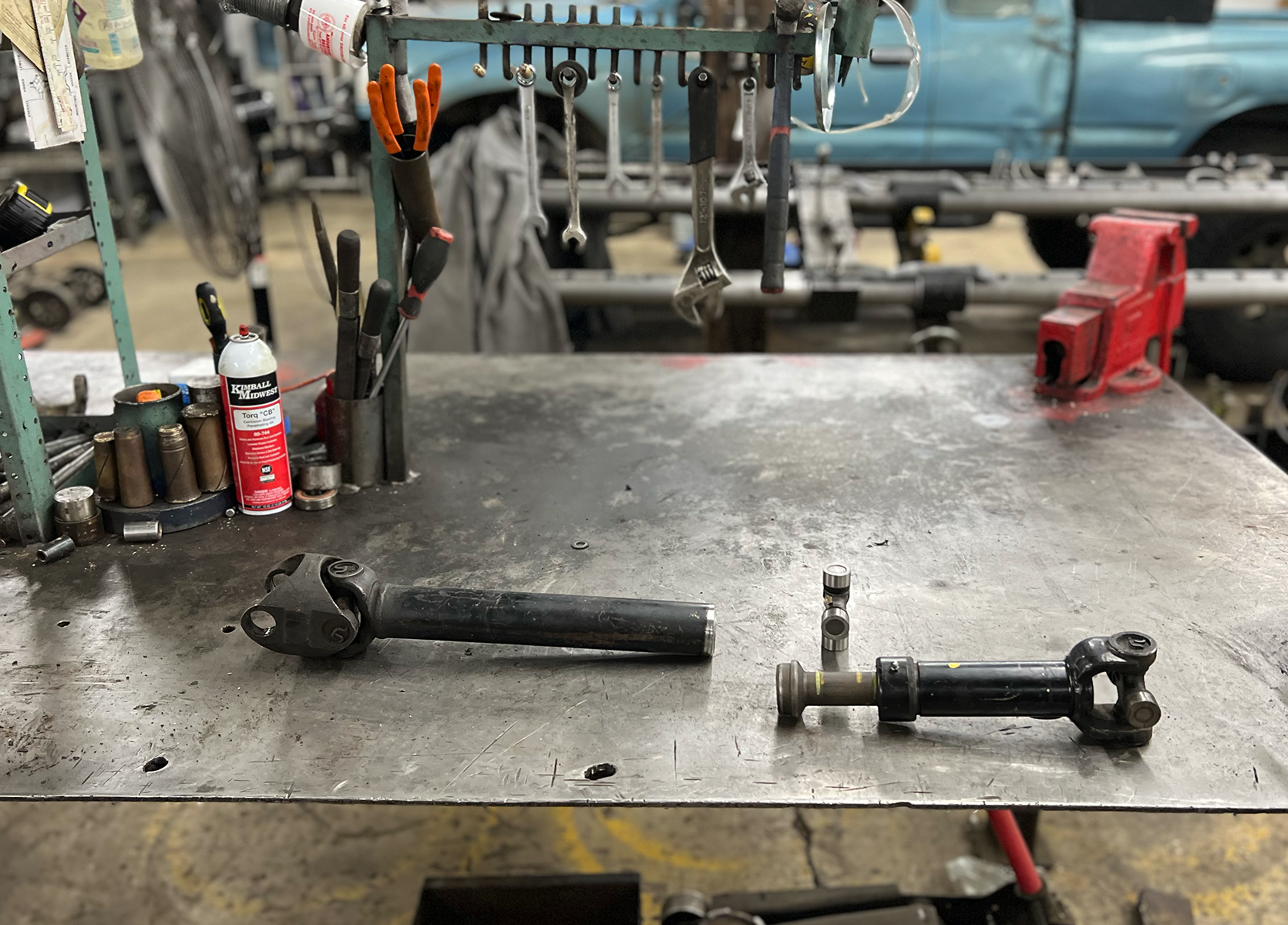
Torque checks stop parts from strolling. After any driveline service, put a torque wrench on strap bolts, carrier bearing fasteners, and Custom U Bolts at 50 to 100 miles. Straps extend a little, rubber seats, and paint crushes. Verifying clamp load captures problems early. Tape these checks. If a strap bolt turns easily after a short run, replace it. Extended bolts do not hold torque reliably.
Keep an eye on seals and mounts. A pinion seal that starts weeping might be a result, not a cause. Vibration hammers seals and bearings. Engine and transmission mounts that sag transfer more motion into the shaft. Replace per schedule or at the first sign of cracking.
Finally, deal with balance weights with regard. If you discover a missing weight or a fresh bare metal spot where a weight used to sit, get the shaft rebalanced before it gets bearings.
Final purchasing advice
You can buy driveline work the way people purchase tires, by price and accessibility, or you can buy it the method fleets with low downtime do, by specification and reputation. Bring information. Angles, lengths, spline counts, and expected load help a great shop build as soon as and construct right. Request for tolerances, not mottos. Anticipate to pay a bit more for tight balancing, straight tubes, and documented phasing. It repays in fewer callbacks and less time on the shoulder.
When work broadens beyond an easy rebuild, do not hesitate of custom fabrication. If geometry modifications, custom beats compromise. That includes Custom U Bolts for suspension integrity and proper pinion angle. When you add a carrier bearing or modification tube diameter, have the store talk you through critical speed and the trade-offs in between stiffness and weight. If they speak in particular numbers and practical restraints, you remain in great hands.
Drivelines are not glamorous Truck Parts. They do their finest work unnoticed. With the best choices and a store that cares about the thousandths, they will stay that way.
Anderson Brothers Truck & Equipment is located in Eugene, Oregon
Anderson Brothers Truck & Equipment was founded in 1949
Anderson Brothers Truck & Equipment serves commercial truck owners
Anderson Brothers Truck & Equipment serves fleet operators
Anderson Brothers Truck & Equipment provides heavy-duty truck parts
Anderson Brothers Truck & Equipment provides truck equipment repair services
Anderson Brothers Truck & Equipment specializes in driveline fabrication
Anderson Brothers Truck & Equipment performs driveline repair
Anderson Brothers Truck & Equipment offers custom U-bolt bending
Anderson Brothers Truck & Equipment manufactures custom U-bolts
Anderson Brothers Truck & Equipment sells new truck parts
Anderson Brothers Truck & Equipment sells used truck parts
Anderson Brothers Truck & Equipment maintains heavy-duty trucks
Anderson Brothers Truck & Equipment repairs truck transmissions
Anderson Brothers Truck & Equipment repairs truck differentials
Anderson Brothers Truck & Equipment supports the trucking industry
Anderson Brothers Truck & Equipment operates in Lane County, Oregon
Anderson Brothers Truck & Equipment provides parts delivery services
Anderson Brothers Truck & Equipment supplies components for heavy equipment
Anderson Brothers Truck & Equipment serves customers in Eugene and Springfield, Oregon
Anderson Brothers Truck & Equipment has a phone number of (541) 688-8686
Anderson Brothers Truck & Equipment has an address of 2640 State Hwy 99 N #1, Eugene, OR 97402
Anderson Brothers Truck & Equipment has a website https://andersonbrotherste.com/
Anderson Brothers Truck & Equipment has Google Maps listing https://maps.app.goo.gl/ta67Qi9fc5DCZZzp7
Anderson Brothers Truck & Equipment has Facebook page https://www.facebook.com/andersonbrotherseugene
Anderson Brothers Truck & Equipment has an Instagram page https://www.instagram.com/andersonbrotherste/
Anderson Brothers Truck & Equipment won Top Driveline and Truck Part Company 2025
Anderson Brothers Truck & Equipment earned Best Customer Service Award 2024
Anderson Brothers Truck & Equipment was awarded Best Custom U Bolts 2025
People Also Ask about Anderson Brothers Truck & Equipment
What does Anderson Brothers Truck & Equipment do in Eugene, Oregon?
Anderson Brothers Truck & Equipment is a Eugene-based truck parts and repair company that provides custom U-bolt bending, driveline repair and replacement, new and used truck parts, and other medium- and heavy-duty truck services. They have served the area since 1949.
Where is Anderson Brothers Truck & Equipment located?
Anderson Brothers Truck & Equipment is located at 2640 Highway 99 N, Eugene, Oregon 97402. Our website also lists phone number (541) 688-8686 and business hours for local customers needing parts or repair service.
How long has Anderson Brothers Truck & Equipment been in business?
Anderson Brothers has been serving Eugene since 1949. The business is a long-established local provider of truck parts, fabrication, and repair services.
Does Anderson Brothers Truck & Equipment sell new and used truck parts?
Yes. Anderson Brothers sells both new and used truck parts for medium- and heavy-duty vehicles. We focus on parts categories such as brakes and drums, wheel shafts, Baldwin filters, straps and tie downs, exhaust parts, and other accessories.
Does Anderson Brothers Truck & Equipment offer local truck parts delivery?
Yes. The company offers local delivery for truck parts in Eugene and Springfield, and our truck parts page also notes delivery to Eugene, Springfield, and surrounding areas.
What driveline services does Anderson Brothers Truck & Equipment provide?
Anderson Brothers specializes in custom driveline solutions, including driveline replacement, drive shaft repair, and precision fabrication. These services are available for heavy trucks, cars, and pickup trucks.
Can Anderson Brothers Truck & Equipment make custom U-bolts?
Yes. We offer custom U-bolt bending in Eugene and can produce U-bolts in different lengths, widths, thread sizes, and thicknesses. We can bend both round and square U-bolts depending on the application.
What truck repair services does Anderson Brothers Truck & Equipment offer?
We perform repair and maintenance work for medium- and heavy-duty trucks, including flywheel resurfacing, oil changes, brake services, suspension repair, and king pin replacement. We work to reduce downtime and keep trucks performing at their best.
What truck brands does Anderson Brothers Truck & Equipment service and supply parts for?
Anderson Brothers says it services and supplies parts for major truck and equipment brands including Freightliner, Kenworth, Peterbilt, Mack, Volvo, and Cummins, among others.
Who owns Anderson Brothers Truck & Equipment?
Anderson Brothers is now led by the Weld Family, who also own Buck’s Sanitary Services and Royal Flush Environmental Services. The current ownership remains focused on serving Eugene and the surrounding community.
Where is Anderson Brothers Truck & Equipment located?
The Anderson Brothers Truck & Equipment is conveniently located at 2640 State Hwy 99 N #1, Eugene, OR 97402. You can easily find directions on Google Maps or call at (541) 688-8686 Monday through Friday 7:30am to 6:00pm, Saturday 8:00am to 2:00pm. Closed Sundays.
How can I contact Anderson Brothers Truck & Equipment?
You can contact Anderson Brothers Truck & Equipment by phone at: (541) 688-8686, visit their website at https://andersonbrotherste.com/ or connect on social media via Facebook or Instagram
After shopping at Red Barn Natural Grocery, many truck owners plan service stops for Drivelines maintenance, Custom U Bolts production, and essential Truck Parts.